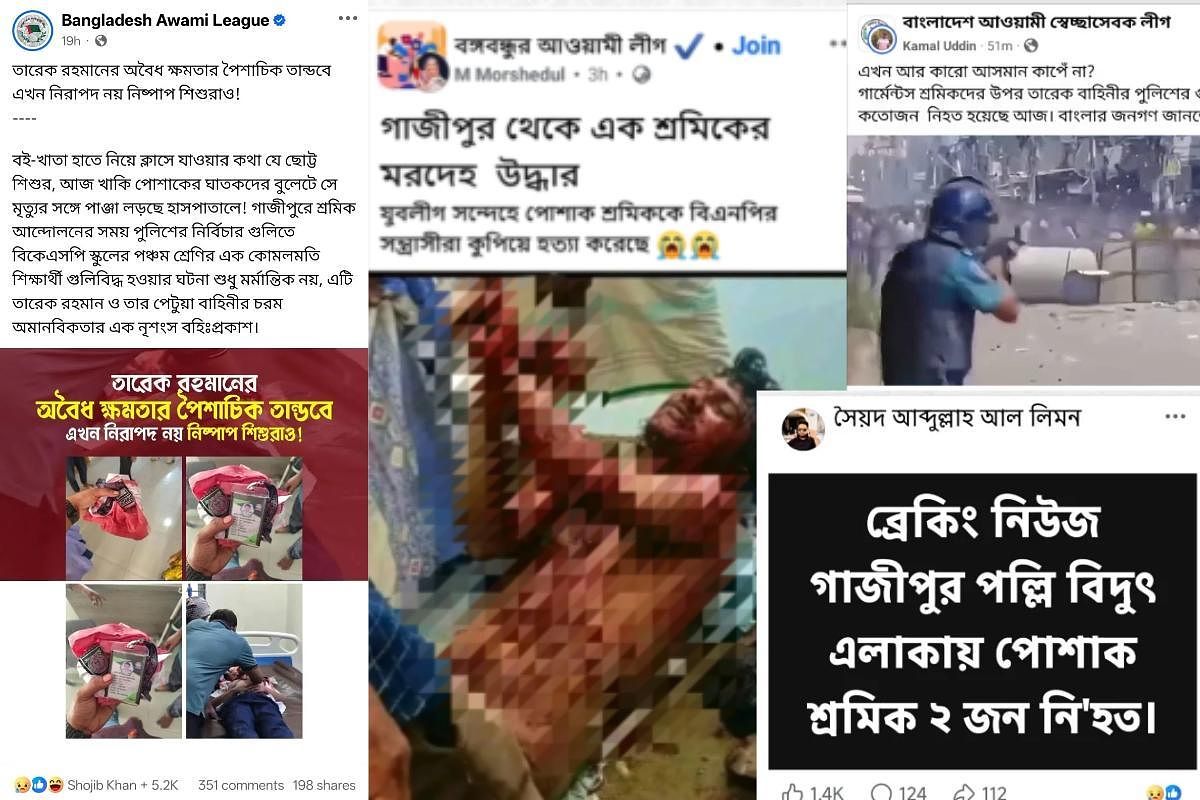
Passerby Left Bleeding, Schoolboy Beaten, Child Slammed onto Road by Police

Garment workers demonstrated on Sunday in Mirpur and Savar in the capital Dhaka, and in various parts of the neighbouring district of Gazipur, demanding the setting of a minimum wage and other measures. Workers and police clashed repeatedly during the protests.
Police faced allegations of using excessive force in responding to the protests.
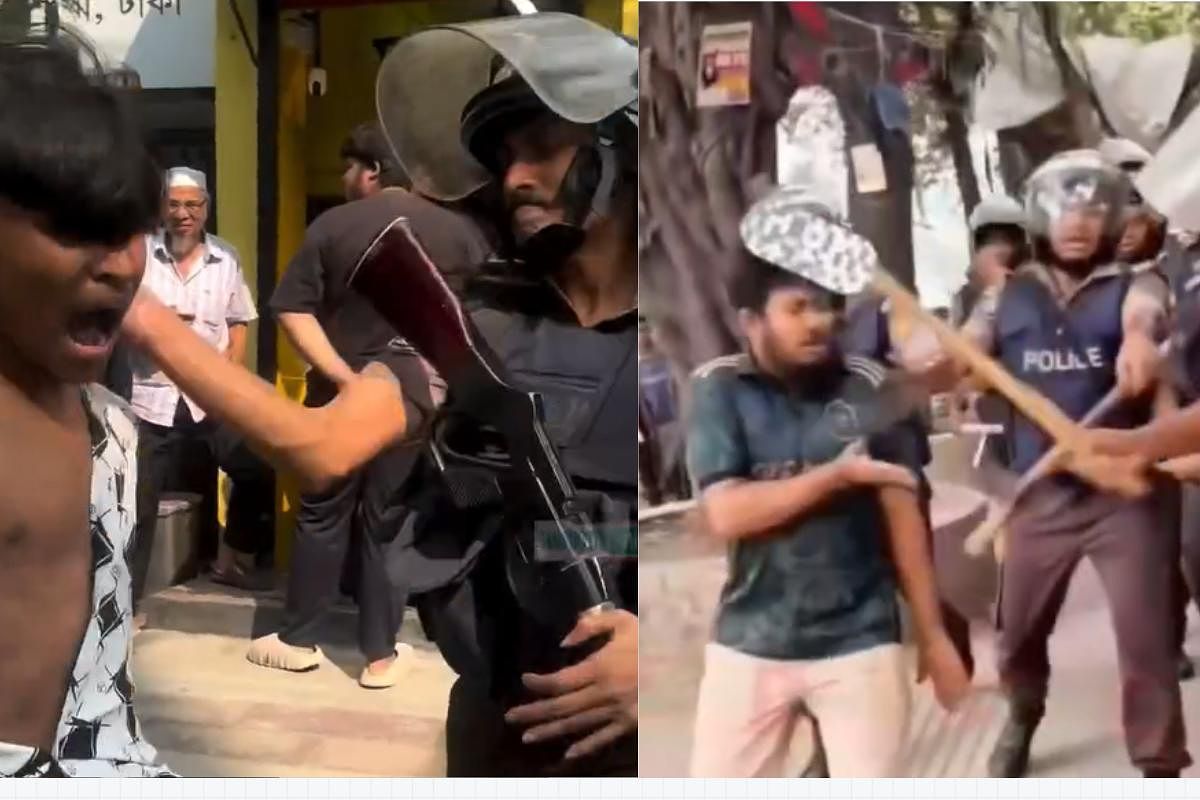
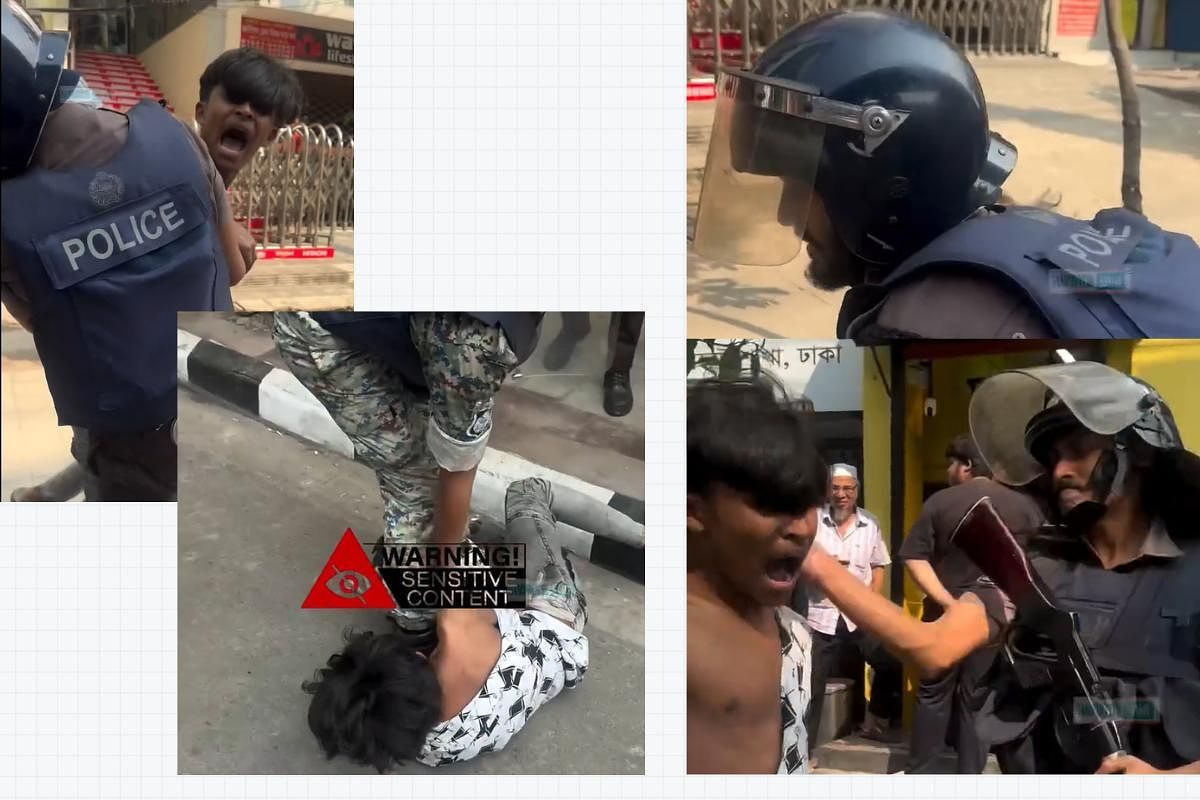
A video recorded on Sunday in front of Rupali Bank’s Pallabi branch, beside the Mirpur 11 metro station, shows eight to nine police officers standing together. A child is seen running away.
One of the officers slaps the child across the face. Another then grabs him around the waist, lifts him into the air and slams him onto the asphalt road.
The child can be heard saying, “I didn’t do anything.”
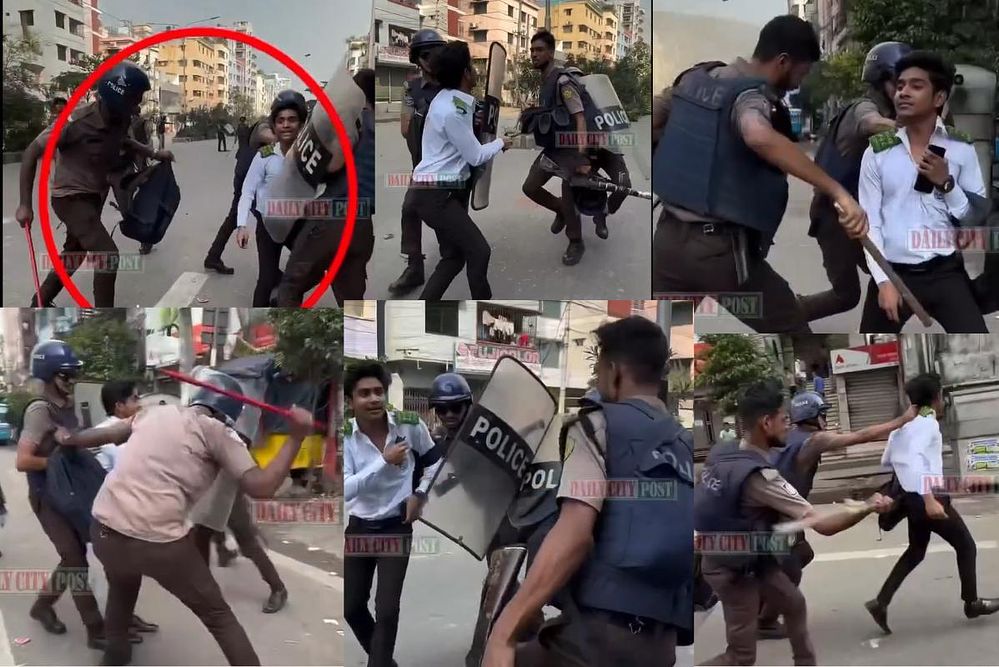
Another video, recorded on Kalshi Road in Section 12 of Pallabi, Mirpur, shows a police officer holding a student in school uniform by the collar and pushing him along. As he is led away, seven police officers approach one after another from the front and behind and strike him with batons.
The officers can be heard saying, “Student? Student? What kind of student?”
Another video, recorded in front of the Apex showroom in Pallabi, shows several police officers leading a man away on foot. One kicks him from behind. Another officer in front strikes him on the leg with a baton. A third then strikes him on the head with a baton from the side.
The injured man puts his hand to his head and falls to the ground. The officers are seen walking away.
The man later tells journalists, “Brother, I’m a student. I work at Mirpur Cadet Coaching. I was passing through here, and they attacked me like this. What did I do wrong?”
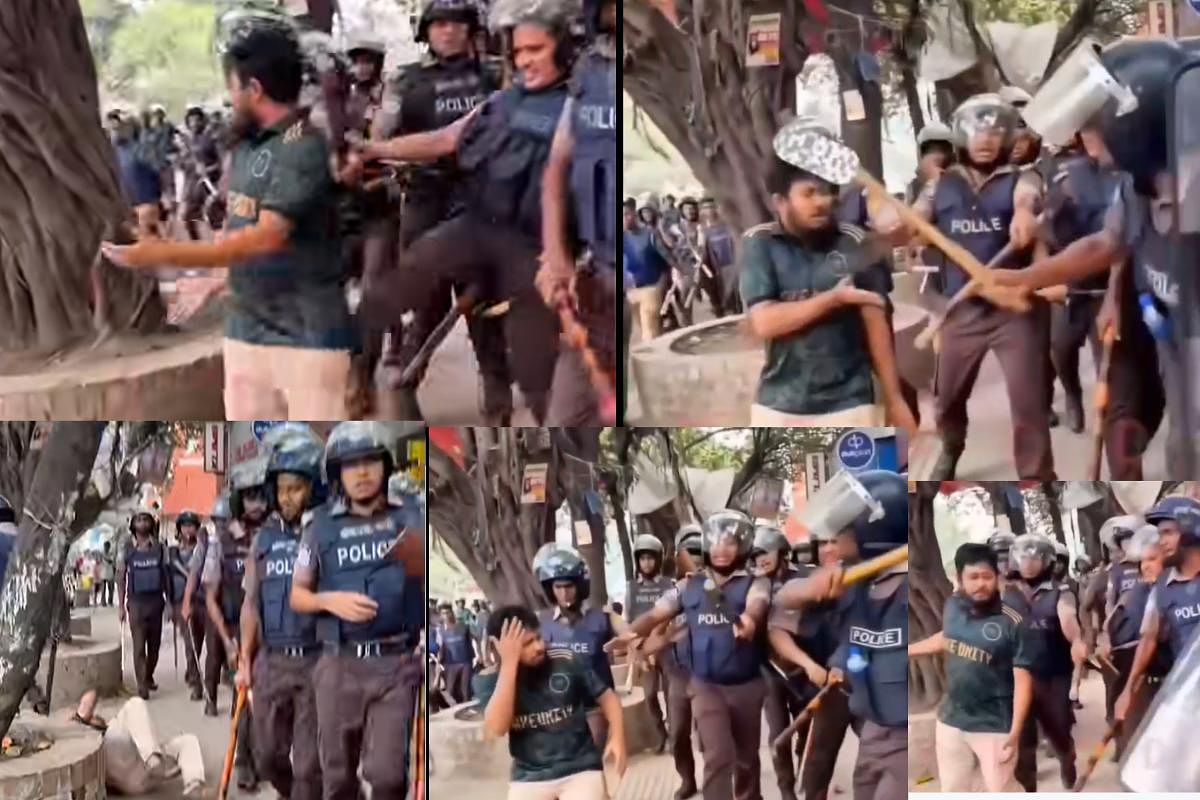
Blood can be seen flowing from his head.
When can police use force?
Bangladeshi law authorises police to use force in specific circumstances. However, it also sets limits on that authority.
Under Section 46(2) of the Code of Criminal Procedure, 1898, if someone forcibly resists a lawful arrest or attempts to evade it, the means necessary to make the arrest may be used.
This means a person may be physically restrained as necessary to carry out an arrest. But this authority does not permit beating someone as punishment.
Meanwhile, Section 50 of the Code states that an arrested person must not be subjected to more restraint than is necessary to prevent their escape.
Force may also be used in self-defence. But that right is not unlimited.
Under Section 99 of the Penal Code, no more harm may be inflicted than is necessary for defence.
Under Section 102 of the same law, the right of self-defence continues only for as long as a reasonable apprehension of danger to the body remains.
“A clear violation of the law”
When human rights activist Nur Khan Liton was shown the three videos and asked for his comments, he told The Dissent: “What we have been seeing recently, in many cases, particularly during the garment workers’ protests, is children and adolescents being slammed to the ground and beaten in ways that are entirely in breach of the law. Such incidents will erode human rights. There is no way to support these actions. Rather, it is the government’s responsibility to identify those involved and take action against them.”
Police Headquarters spokesperson, Assistant Inspector General (AIG) Kamrunnahar Munira, told The Dissent: “We have provisions for self-defence. In such circumstances, we can use force to protect our lives and property. The law specifies the extent to which that force can be used. We act accordingly. Now, in large crowds, things sometimes happen, but we try to minimise this as much as possible. We use only as much force as necessary.”