Death Threats After Leaving Extremism: Former Air Force Member Reveals His Experiences
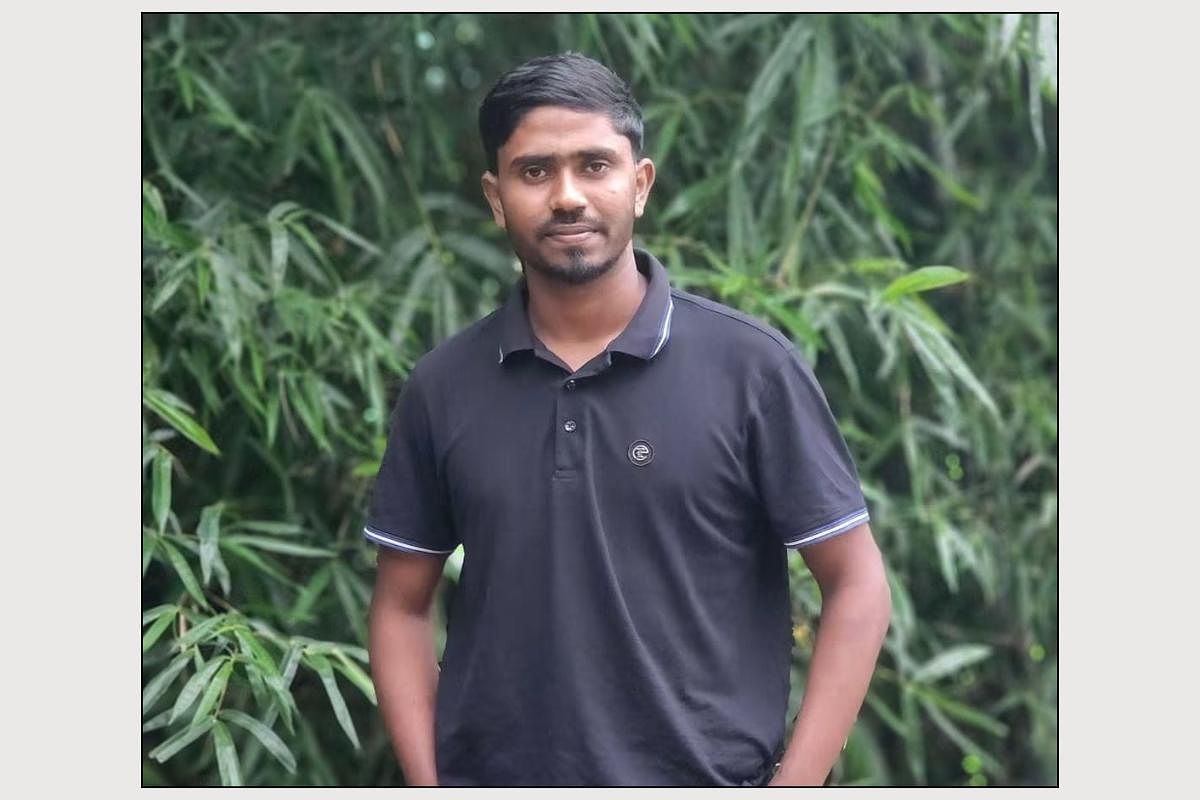

A former Bangladesh Air Force soldier named Sabbir Hossain (BD 476965) posted a video statement on Facebook on the night of September 28. In the video, he claimed that people linked to a militant organisation had sent him a message through the SimpleX app on September 26, threatening to kill him. Sabbir said the threats were made because he had informed intelligence agencies about several former Air Force members allegedly involved with terrorist organisations.
In the video, Sabbir said he joined the Air Force as a soldier in April 2024 and lost his job through a court-martial in October last year.
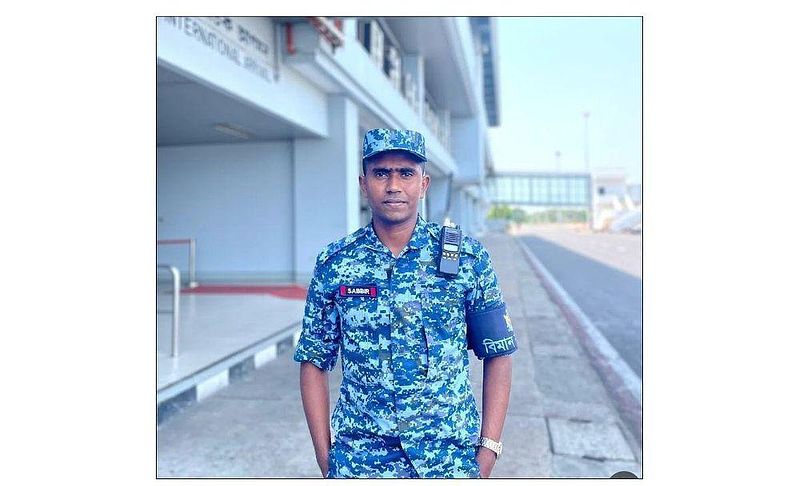
Sabbir while serving in the force
Sabbir Hossain himself was once drawn to extremist activities. He even considered leaving the country for “jihad”. He now claims to have abandoned those ideas. Several sources within the police and intelligence agencies told The Dissent that they are investigating Sabbir’s involvement in extremism and the allegations he subsequently made against people he identified as being linked to militant organisations.
After Sabbir posted his video on social media, The Dissent interviewed him. He described his experiences of becoming involved in extremism and his subsequent attempts to leave it behind. During the interview, he named several individuals. The Dissent sought to investigate three of the people he identified.
How Sabbir Was Drawn Towards Extremism
Sabbir said he joined the Air Force as a soldier in April 2024. According to him, he was dissatisfied with the low-paying job after joining. While uncertain about whether to continue serving, he went home during last year’s Eid-ul-Azha holiday and did not return to his unit. However, nearly two months after the holiday ended, he applied to rejoin the force and returned to Zahur Base in Chattogram. The Air Force subsequently formed a board to examine his case and dismissed him through a court-martial.
Sabbir said that while he was being held at the quarter guard during the court-martial proceedings, several Air Force members contacted him and tried to draw him towards religious extremism.
He told The Dissent, “The board proceedings continued for 47 days. During that period, I was extremely frustrated. They contacted me at that point and gave me various books. I read them, thinking they were religious books. Gradually, I realised that they were involved with a militant organisation.”
During his conversation with The Dissent, Sabbir showed several photographs, screenshots and messages stored on his mobile phone. Among them was a text message threatening to kill him.
The threat recently sent to Sabbir through a messaging app called SimpleX read: “Sabbir, I could never have imagined you would cause such great damage. Have you sold your faith to a taghuti state? You have destroyed an entire markaz. Under Sharia, killing you is obligatory. Anyway, let’s see how long your state and your DGFI can protect you. Be aware! (A lowly servant of Allah, Musafir).”
Explaining why he believed he had been threatened, Sabbir said that when he realised he was making a mistake, he began trying to abandon extremist ideas and informed intelligence agencies about those who had attempted to draw him into extremism. He claimed that the extremists began threatening him after learning of this.
He Wanted to Leave the Country for ‘Jihad’ After Becoming Involved in Extremism
Describing his former extremist views, Sabbir told The Dissent, “At the time, I thought that the way they were planning and thinking—that establishing Islamic rule globally would be a good thing—made sense. I had become motivated to leave the country. But whenever I thought about leaving, the reality would come before my eyes. If I left, I would still have a life of my own. That was why I was taking my time. Whenever they made me an offer, these realities would come to mind: my family, my father, my mother, and my circle of friends.”
Asked which extremist organisation he had become involved with, Sabbir identified Tehreek-e-Taliban Pakistan (TTP), a Pakistan-based militant organisation. He said the people who recruited him were associated with the TTP.
Sabbir said, “Mustafiz [another Air Force member who recruited him] told me about Imran Haider. I never communicated directly with Imran. However, Mustafiz told me to listen to his lectures.”
Imran Haider had worked as a ground engineer at Biman Bangladesh Airlines. He later joined the TTP and is currently based along the Pakistan-Afghanistan border. According to several sources, he coordinates Bangladeshis fighting for the TTP and is also responsible for recruiting young Bangladeshis. He openly promotes the TTP under his own name on social media. He has previously given several interviews to The Dissent, and his name has appeared in multiple reports by the outlet on the TTP.
Sabbir Names Air Force Members Allegedly Involved in Extremism
In his video statement and interview with The Dissent, the former Air Force member named three former personnel whom he said had tried to recruit him for the TTP: Corporal Mustafiz and Corporal Shoaib (BD 474535), both from the 48th entry, and Corporal Jaber from the 47th entry.
Corporal Jaber
Sabbir said that while he was confined to the quarter guard, Corporal Mustafiz began contacting him and gave him several books to read. These included a novel titled The Princess of Kashmir by Said Zaman; The Tiger of Palestine by Sayeed Usman; Double Standard Two and The History of Disobedience by Dr Shamsul Arefin Shakti; and The World Order in the Mirror of History by Hedayatullah Mehm and. The Dissent identified the authors’ names.
Sabbir claimed that, in addition to supplying him with books, Mustafiz and his associates arranged good meals for him from the mess during that period. This helped him develop a close relationship with them.
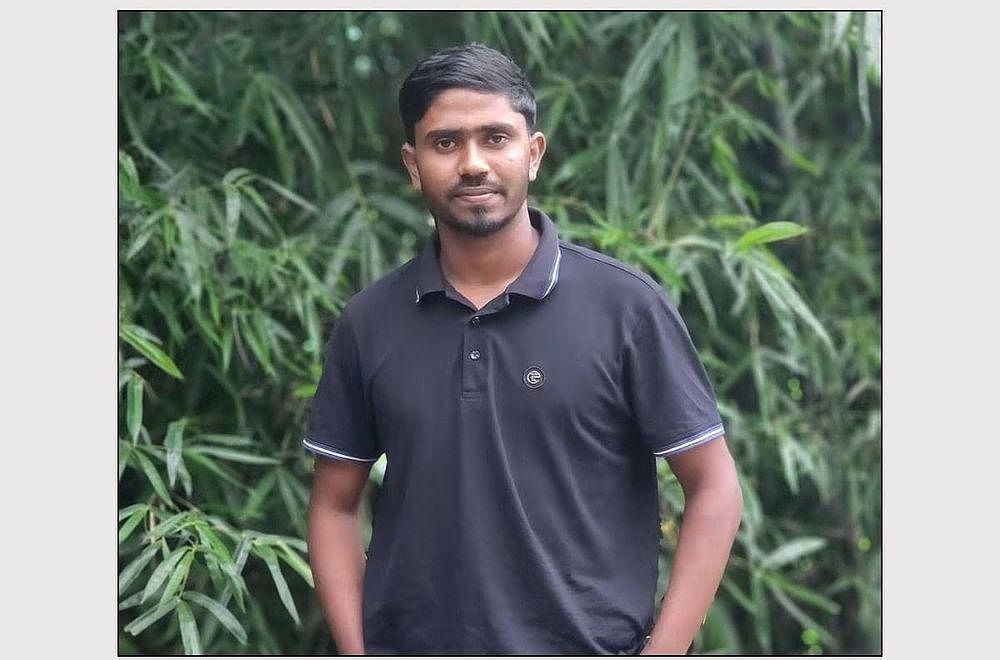
Sabbir
He said Shoaib had previously been his training instructor in the Air Force. Shoaib later fled to Qatar, a country in the Middle East. During that period, Sabbir communicated with him about how he could leave the force. Corporal Shoaib Ahmed continued contacting him even after Sabbir was dismissed through a court-martial.
Sabbir told The Dissent that Shoaib continued trying to indoctrinate him into extremism through their ongoing communication. As part of this effort, Shoaib told him that a young man from Muksudpur in Gopalganj had been “martyred in the path of Allah” while fighting for the TTP. Sabbir is also from Muksudpur in Gopalganj.
Sabbir said Shoaib Ahmed informed him of the young man’s death, saying, “He was martyred while fighting in the path of Allah. We couldn’t do anything.”
In November last year, The Dissent reported that Ratan Dhali, a young man from Muksudpur in Gopalganj, had been killed while fighting for the TTP in Pakistan.
He Became Afraid After Hearing of Mustafiz’s Arrest
Sabbir said that after he was dismissed from the Air Force, Mustafiz also fled to Pakistan. Sabbir claimed that Mustafiz was detained by Pakistani forces after arriving there.
Sabbir told The Dissent, “Around April 16 or 17 this year, Shoaib told me that Mustafiz had gone to Pakistan and been caught by the army. I became frightened after hearing this and decided to inform the Air Force about them.”
He said he informed his field unit about the entire matter in early May and sought protection. Recounting what happened, he said, “I went to Dhaka, went to headquarters and told them everything. Meanwhile, I unofficially learned from two or three friends I had in the service that things had become very tense within the force and that all this information had become widely known. They were seizing everyone’s phones. I then went to my field unit and told them everything.”
Sabbir added, “After I informed them, the field unit asked me what I wanted. I said, ‘Sir, I have the information and have handed it over to the state. Now you must ensure my security. Since I have done so much for the state, it has an obligation towards me. I am a young person and a trained person. I made a mistake, and I want to rejoin the service.’ They said there was no such system, but they would discuss it and try to help me. They said they would speak to the director and the chief. I told them that I had submitted a mercy petition and that if the chief signed it, I could rejoin the basic course. They reassured me. They also said that since I was seeking state protection and was now a civilian, they could not provide security themselves and would contact DGFI. Then DGFI came and spoke to me. They said that since I was providing information to the state, the state would certainly protect me.”
He claimed that after receiving death threats, he tried to contact his field unit and the Directorate General of Forces Intelligence (DGFI), but received no response. As a result, he said, he now fears for his life.
In his social media posts, Sabbir alleged that several Air Force members were involved with different militant organisations and that Corporal Shoaib was the principal figure behind the group. He said, “Some time ago, rumours emerged about militant activities in the Air Force within the Bangladesh armed forces. Although the authorities did not take the matter seriously or dismissed it, it is actually true and is a very real incident. I saw many such people in the Air Force. Based on my information, I provided these details to the Air Force field unit and DGFI, the intelligence agency of the Bangladesh Army. There is a group within the Bangladesh Air Force, and its principal figure was Corporal Shoaib, a Ground Combat Instructor (GCI) from the 48th entry.”
Sabbir said, “People like Shoaib from the service repeatedly influence others, encouraging them to go absent without leave and become involved with militant organisations in Pakistan and elsewhere. They were trying to influence me in the same way.”
An Extremely Influential Civilian
Sabbir told The Dissent that Shoaib Ahmed introduced him to a civilian who is a religious scholar, widely known in Bangladesh and has a large following.
He said the person’s followers address him as “Shaykh”.
According to Sabbir, Shoaib met the man when he travelled to Qatar in November last year, and the two developed a relationship. Shoaib later introduced Sabbir to him as well. Sabbir said he had visited the civilian’s office in Chattogram several times.
The Dissent has seen evidence of Sabbir’s association with the man. However, citing concerns about his security, Sabbir asked The Dissent not to disclose the man’s identity. He also declined to provide photographs of himself with the man stored on his device for publication.
Sabbir told The Dissent, “That person is extremely influential. Many prominent people visit his office. I will disclose his name and speak about him only if the state ensures my security.”
Sabbir further told The Dissent, “Although Shoaib’s activities were centred on Pakistan, my interest shifted towards Arakan after I became associated with this civilian. That is because the civilian is interested in Arakan. He has disagreements with those whose activities are centred on Pakistan.”
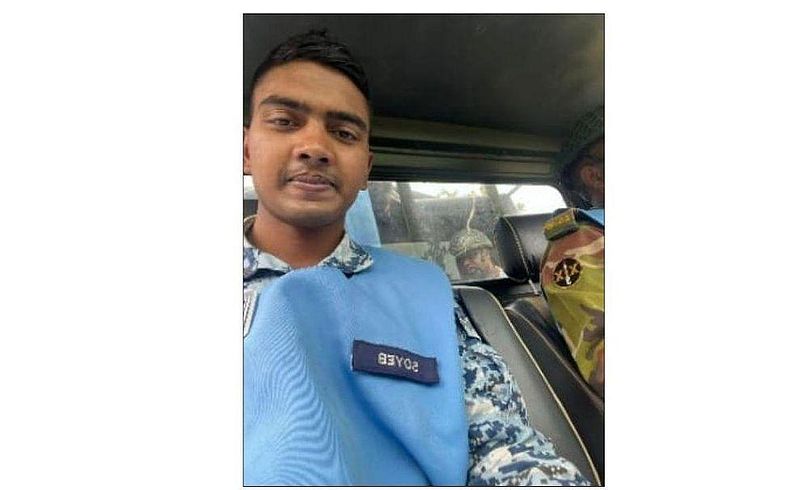
Sabbir while serving in the force
Imran Haider, the Bangladeshi fighting for the TTP in Pakistan, has frequently criticised on Facebook what he described as the efforts of a Chattogram-based religious scholar to encourage young people to focus on Arakan.
In late October last year, a religious scholar based in Chattogram warned Bangladeshi youths against joining the TTP in a speech and encouraged them to join jihad in Arakan.
Following the speech, Bangladeshi TTP members based in Pakistan openly criticised the scholar. In November last year, Bangladeshi TTP members also issued a video message standing with weapons and warning those who opposed the TTP.
What The Dissent Found About the Three Air Force Members
The Dissent attempted to investigate the three Air Force members named by Sabbir: Corporal Shoaib Ahmed, Corporal Mustafizur Rahman and Corporal Jaber.
When The Dissent contacted Shoaib’s mother, Shahana Yasmin Lovely, she said she did not know where her son was and that he no longer communicated with her.
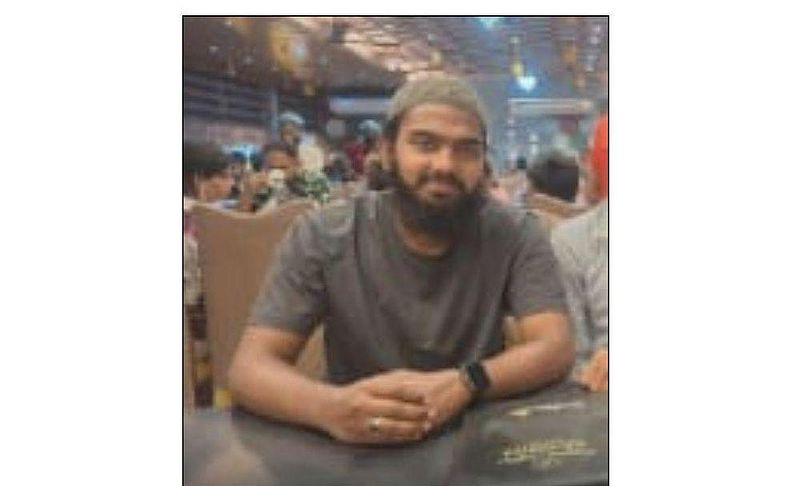
Corporal Shoeb
Shahana also said Shoaib travelled to Qatar on the day of Eid-ul-Fitr last year. She remained in contact with him while he was in Qatar. However, he returned to Bangladesh in January this year. A few days before this year’s Eid-ul-Azha, he left home again and has not contacted her since.
Shoaib’s mother claimed that he was still serving in the Air Force when he went abroad. She said he had been on duty even the day before his departure. She told The Dissent, “His friends there in Qatar arranged his visa and took care of everything. He had wanted to go two years earlier as well, but I did not let him.”
Under military rules, service members are expected to hold official passports and obtain government clearance for overseas travel. However, Shahana Yasmin said her son did not use an official passport or obtain permission to travel abroad. Asked about this, she told The Dissent, “There is no point in asking me this question. Did those who went before him travel on official passports? They all left through underhanded means.”
Shoaib’s mother said her son was religious and performed the five daily prayers. She said he had given her two Islamic books to read. A specialised agency working on terrorism also photographed two Islamic books placed on a table at Shoaib’s home. The Dissent obtained the photograph. The books shown were Tafsir of Surah At-Tawbah, written by Abdullah Azzam, an ideological leader of al-Qaeda, and Muslim Bang, written by Asif Adnan. Abdullah Azzam was one of the pioneers of global terrorism and a close associate of Osama bin Laden. Asif Adnan was arrested in 2014 on allegations of involvement in terrorism. However, he has repeatedly denied involvement with any terrorist organisation in his statements and has claimed that the allegations against him were false.
The Dissent sent Shahana Yasmin a photograph of the two books on the table and asked whether they were the same Islamic books her son Shoaib had given her to read. She claimed that the books he had given her were different. She said she knew nothing about the books on the table, although she identified the table as belonging to her home. Expressing suspicion, she said, “Three people came. I do not know whether they were the ones who left the books there.”
The Dissent asked Shahana Yasmin to provide CCTV footage showing the three people entering the house. In the footage she provided, one person could be seen carrying a thin file and a notebook, while the other two had empty hands. None of them appeared to be carrying books, and none had a bag.
Throughout the conversation, Shahana Yasmin repeatedly expressed anger towards the people who had visited her home from an agency.
To investigate Mustafizur Rahman, The Dissent contacted Abu Bakar, his sister’s husband, who also works for the police. He told The Dissent, “Mustafiz had come home on leave. He was supposed to report to his station on April 13. He left home on April 10, saying he was going to report to his station. Since then, we have had no information about him.”
Mustafiz’s father, Mofizul Islam, filed a general diary (GD) at Savar Police Station on August 2, reporting his son missing. The GD stated, “My son went missing at 3:00 pm on April 11, 2026, from the Jamsing area of Ward No. 01 of Savar Municipality, under Savar Police Station.” The address of the house was given as “C 8/10, East Jamsing”.
Mustafiz’s family home is in Sadya Puskurni area under Kotwali Police Station in Rangpur. The address mentioned in the GD filed by Mustafiz’s father matches the address of Shoaib Ahmed’s home. However, the GD does not mention Shoaib.
Mustafiz’s father, Mofizul Islam, told The Dissent, “He came home on a month’s leave. Then, on April 10, he left home to return to work. He called after reaching Dhaka. I asked him why he was in Dhaka, since his workplace was the training centre in Chattogram. He said his friend Shoaib lived in Savar, Dhaka, and that he would meet him there. On April 11, he again told me he was there. After that, I called him, but the calls would not connect. His mobile phone was switched off. We have no idea where he is now or what he is doing.”
During a conversation with Shoaib’s mother, Shahana Yasmin acknowledged that Mustafiz had visited her son. She said, “Friends and colleagues can come to the house.”
A report by a specialised agency working on terrorism stated that Mustafiz had been detained by Pakistani security forces. Dismissed soldier Sabbir made the same claim to The Dissent, citing his conversations with Shoaib.
The Dissent was unable to contact Corporal Jaber’s family. The two mobile phone numbers listed on his identity card were switched off when called.
However, The Dissent obtained a photograph showing Jaber crossing immigration with his wife. On March 19, he travelled to Karachi through Hazrat Shahjalal International Airport on Biman Bangladesh Airlines flight BG 341, departing at 6:29 pm on a private passport and tourist visa. The Dissent obtained documents relating to the journey.
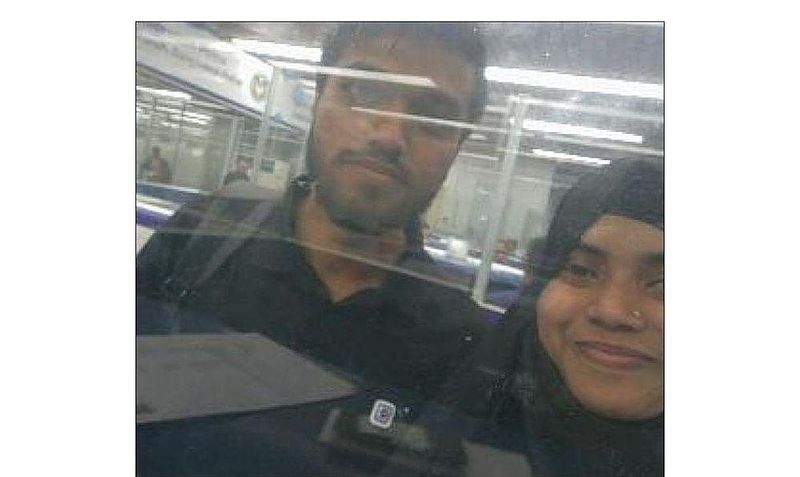
Siamese Immigration Jaber
Sabbir Seeks Protection
After the death threat sent on September 26, another message in English was sent to Sabbir the following Wednesday, September 30. It read: “The previous message was just a warning for you. Patriotism in front of public? The matter was not taken well. This is the last chance to you to get away from yourself and stop it here. You are talented, don’t make the same mistake again. Remember…… Hasbunallah Owa Nemal Owakil (in Arabic)”
The Bengali meaning was: “The previous message was just a warning. Displaying patriotism in front of people? The matter was not taken well. This is your last chance to stay away and stop here. You are intelligent; do not make the same mistake again. Remember… Hasbunallah wa ni‘mal wakeel.”
Sabbir told The Dissent that he feared for his life after receiving the death threats. He said, “Since leaving the service in April, I have helped the state in various ways by providing a great deal of information about people involved in sedition or different militant and extremist activities. Militancy exists in Bangladesh, and these people use people’s religious devotion in the name of jihad to send them to different countries. They operate through secret networks or schemes involving sedition. I am proud of what I have done for the state and the country. The state and my country have benefited from my work, and I am seeking protection because of the information I have provided.”
Sabbir added, “I presented the force with all the detailed information and evidence, but I received no help from them. Now, the organisation or network involved in these activities and claiming to work for the country and the state is threatening to kill me and sending me messages. I am very concerned for my life, and I am asking the state and the country to protect me. I took risks with my life to work for the state. Now I am seeking personal protection from the country and all its authorities, including intelligence agencies, civilian forces and defence forces.”
He added, “I have a family, my father, my mother and my sisters. Considering everything, I am asking for protection.”
Sabbir filed two general diaries over the two threats: one at Hazaribagh Police Station on September 27 and another at Muksudpur Police Station in Gopalganj on September 30.
What the Police and Intelligence Agencies Say
An intelligence agency working on terrorism told The Dissent, “The mobile number listed in the private passport used by Mustafiz, who was detained in Pakistan, belonged to Sabbir. We tracked him down through that connection. We believe Sabbir himself had been motivated and was planning to leave the country. However, he may have become frightened after Mustafiz was detained. Our personnel had already visited his home to look for him. We later learned that he reported the matter to his field unit.”
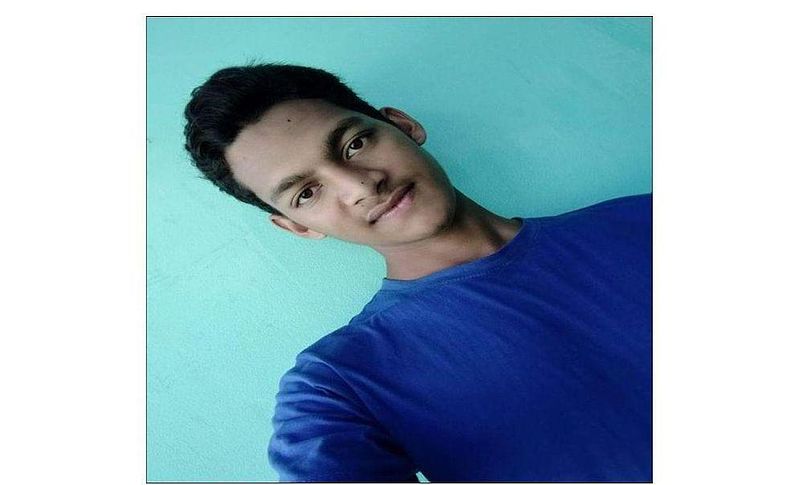
Corporal Mustafiz
Sub-Inspector Sarafat Zaman, the investigating officer handling the general diary filed by Sabbir at Hazaribagh Police Station, told The Dissent, “We are trying to examine the matter from different angles. We have not found anything conclusive to report yet. The messages sent to him have been forwarded to the cyber unit for forensic analysis. We will know more once we receive the report.”
When The Dissent called the number listed beside the name of the officer responsible for the Air Force desk at the Inter-Services Public Relations (ISPR) directorate, the call was answered by Syeda Tapsi Rabeya Lopa, an officer working at the Navy desk. She advised The Dissent to contact the Air Force desk. However, the ISPR website lists no separate number for the Air Force desk; the same number is provided for both the Air Force and Navy. As a result, The Dissent was unable to obtain the Air Force’s comment on the matter.