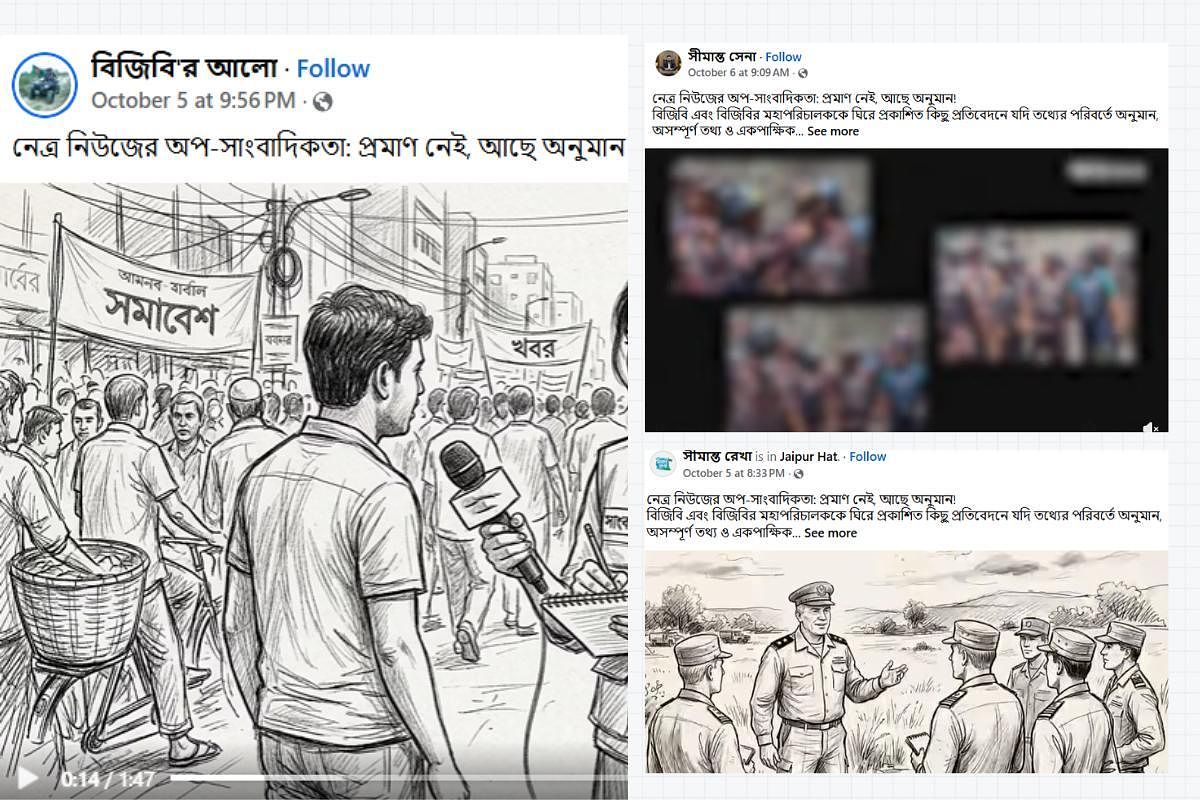
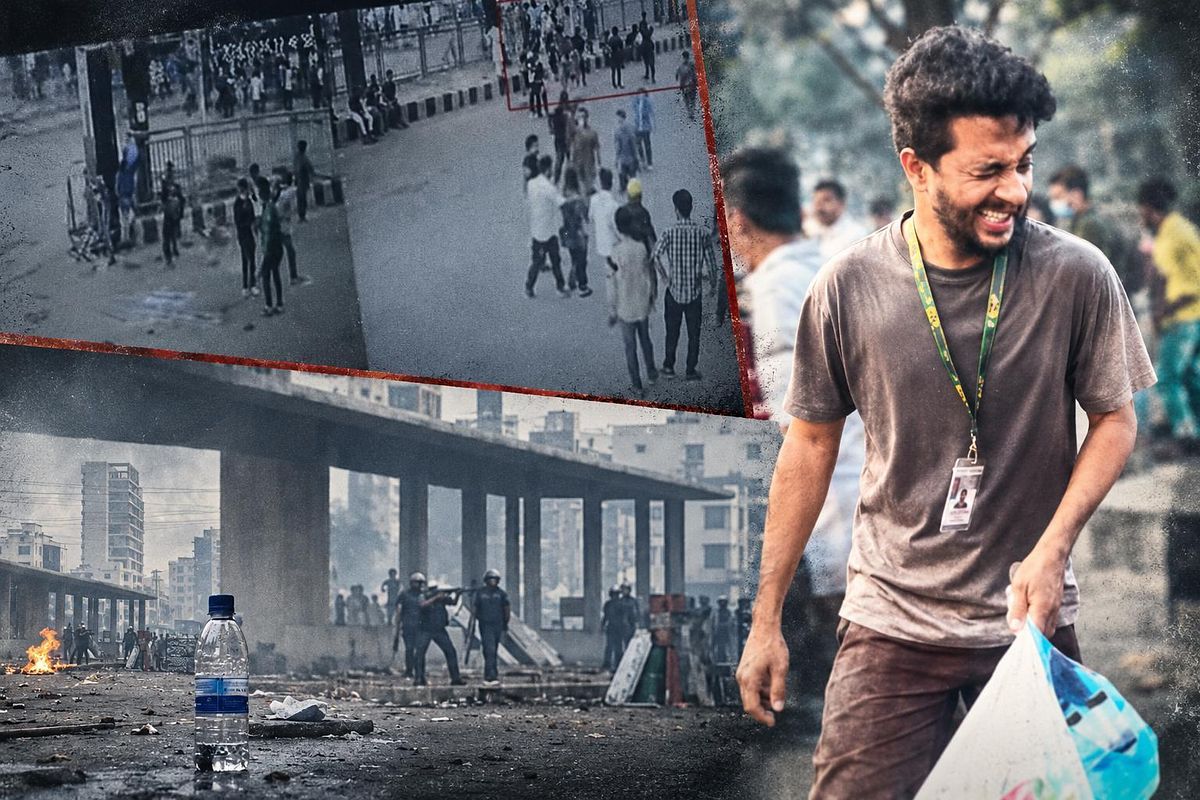
Media reports questioning Miraj Sheikh disappearance were produced with Coast Guard support
The disappearance of Miraj Sheikh from Bagerhat has become a widely discussed case in Bangladesh and has also drawn international attention.
On July 19, US-based Human Rights Watch (HRW) was the first international rights organization to publicly highlight the case. It described Miraj's disappearance as the first alleged enforced disappearance in Bangladesh since the fall of Sheikh Hasina's authoritarian government during the 2024 mass uprising.
In a statement, Human Rights Watch said: "On the night of April 10, 2026, according to multiple witnesses, Coast Guard personnel detained fisherman Miraj Sheikh in the Joymonir Ghol area near the Sundarbans in Mongla and took him away in a speedboat. When his family went to the Coast Guard office in Digraj, Mongla, the following day, they were initially told that Miraj was 'on an operation' and were asked to return in the afternoon. But when they returned, Coast Guard officials said Miraj had never been there."
The Dissent, BBC Bangla and Deutsche Welle later carried out separate investigations, reporting similar accounts based on interviews with witnesses.
The Dissent's earlier investigation also presented evidence suggesting that Miraj's family and local residents who protested his disappearance were subsequently subjected to various forms of harassment by the Coast Guard.
As pressure from Bangladeshi and international human rights organizations mounted for an investigation into Miraj's disappearance, two Bangladeshi media outlets simultaneously published what they described as "investigative reports" that sought to cast doubt on the disappearance allegation.
The reports attempted to establish that Miraj had not been disappeared by the Coast Guard and that his family's allegations were untrue.
The Dissent has now found evidence that reporters from the two outlets traveled aboard Coast Guard vessels while conducting their purported investigations aimed at disproving the allegations against the force.
Multiple sources also told The Dissent that the Coast Guard itself arranged the two media teams' journey from Dhaka to the Sundarbans area of Bagerhat, their stay there and their return trip.
Two outlets conduct coordinated 'investigation' aboard Coast Guard boats to argue there was no disappearance
The two outlets were private television station Ekhon TV and newly launched daily newspaper Nagorik Protidin.
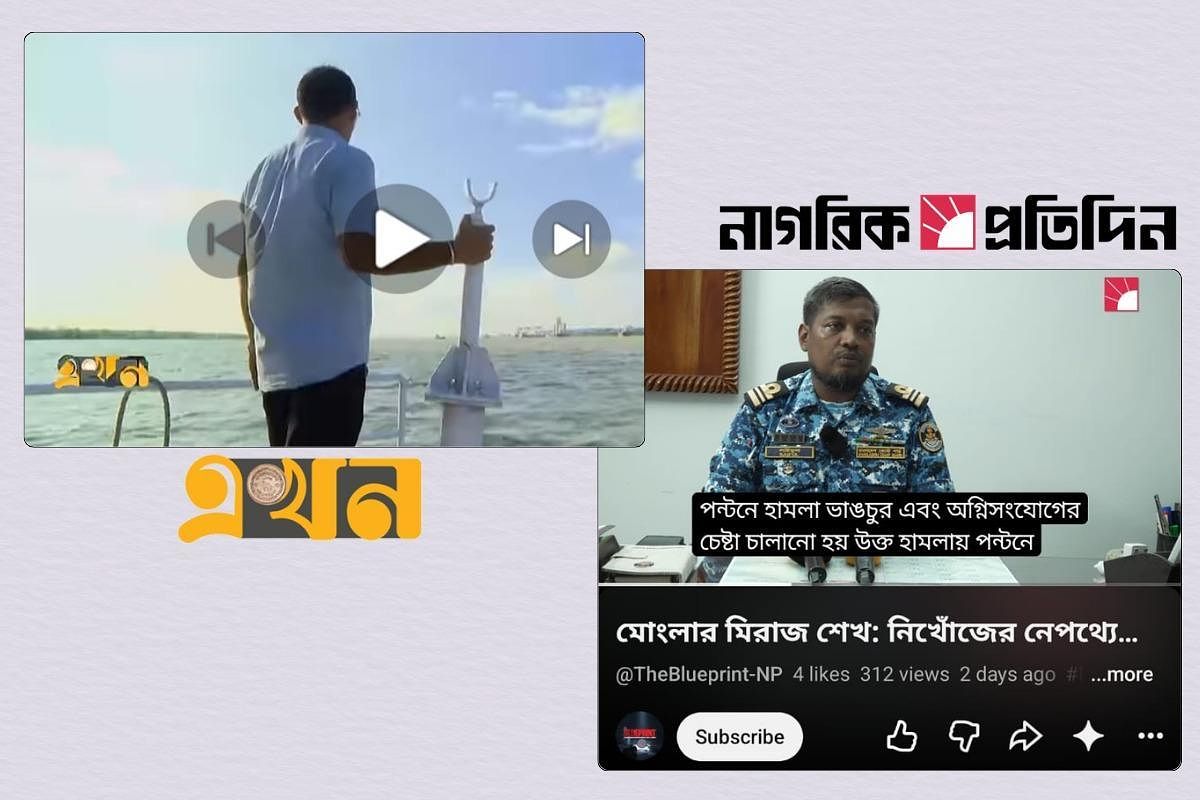
On August 26, Ekhon TV published an 8-minute, 41-second report on its YouTube channel under the headline: "Family claims 'disappearance', investigation reveals secret information about Tk 600,000! | Investigative News | BD Crime."
Nagorik Protidin's headline was: "Miraj Sheikh of Mongla: What is really behind his disappearance?"
The 31-minute, 39-second report was published on August 26 on the Facebook page of the newspaper's investigative program, The Blueprint.
Ekhon TV's report was produced by Special Correspondent Shahriar Zaman Dip and video journalist Abu Bakkar Siddique Moon. Nagorik Protidin's reporter was Rakib Hasan, while Saiful Sayeed Islam worked on the video.
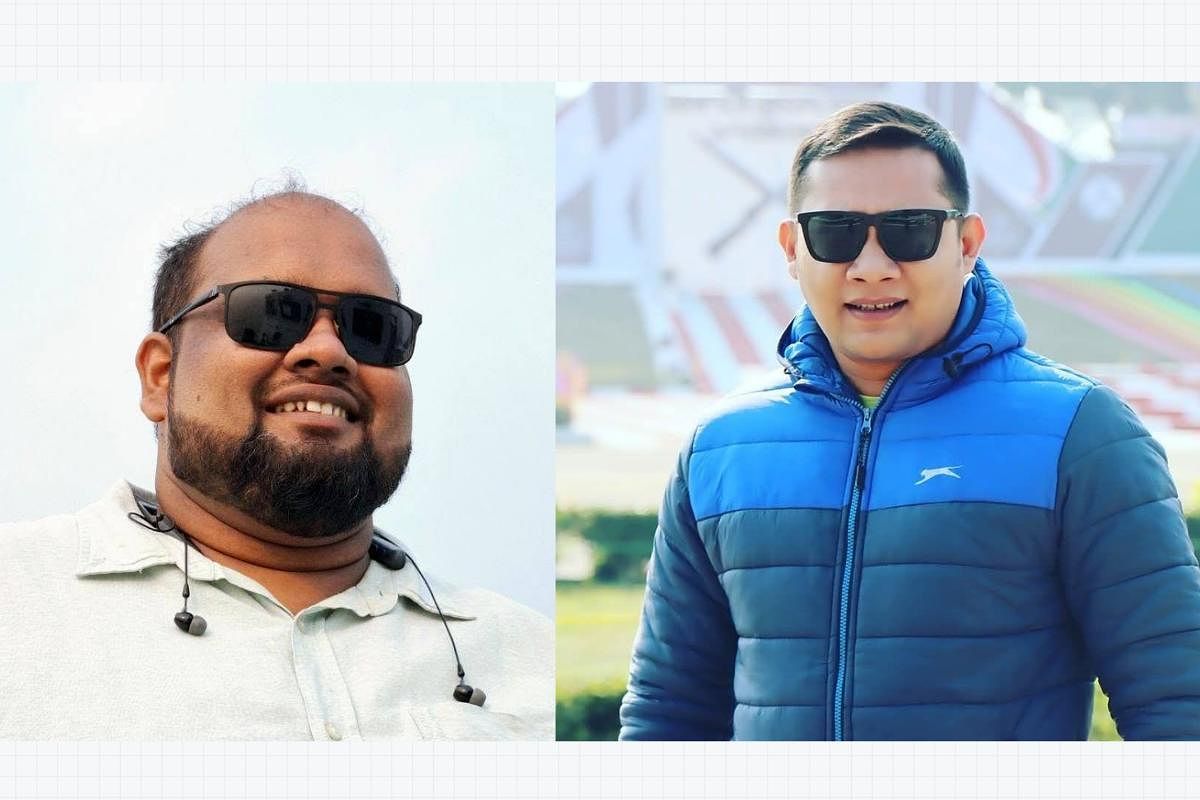
Notably, Shahriar Zaman Dip had joined Ekhon TV from Nagorik Protidin earlier in August.
After analyzing the two reports, photographs posted on the Facebook profiles of the reporters and video journalists involved, and information obtained from several sources, The Dissent established that all four media workers traveled together from Dhaka to Bagerhat.
They stayed there for four days and traveled to different locations aboard Coast Guard vessels.
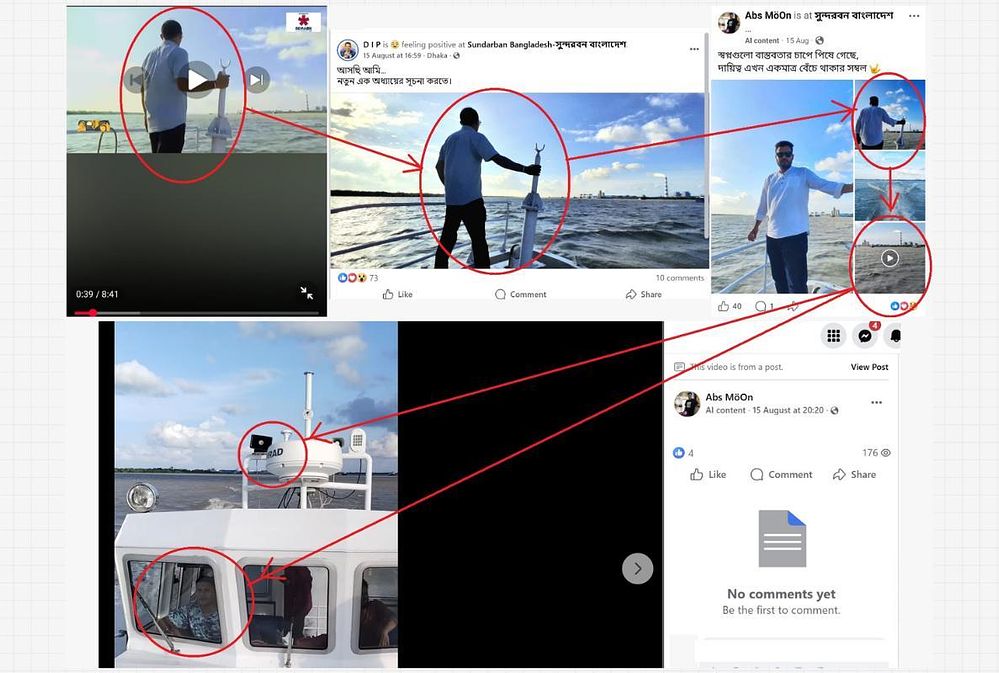
At the beginning of Ekhon TV's report, Shahriar Zaman Dip, wearing a white shirt, can be seen standing at the front of a moving vessel while holding an iron pole.
On August 15, Dip posted a photograph of himself in the same position on his Facebook account, tagging the Sundarbans as the location. The caption read: "I'm coming... to begin a new chapter."
On the same day, video journalist Abu Bakkar Siddique Moon, who was traveling with Dip, posted several photographs and a video of himself aboard the same vessel.
One photograph shows Moon posing in almost exactly the same way as Dip, holding the iron pole.
In Moon's video, a man wearing a Coast Guard uniform can be seen operating the vessel. The Coast Guard's name is written in English on the vessel, although only the letters "URAD" are visible in the footage. A marine radar dome, or radome, is also visible on top of the vessel.
The footage used by Ekhon TV, together with the journalists' own photographs and videos, therefore confirms that the two traveled aboard a Coast Guard vessel while conducting their purported investigation.
A source, speaking on condition of anonymity, confirmed that Nagorik Protidin reporter Rakib Hasan and video journalist Saiful Sayeed Islam were also aboard the same vessel.
Nagorik Protidin's report also shows another, relatively larger Coast Guard vessel in several sequences.
Several uniformed Coast Guard personnel can be seen on board while filming appears to be taking place with two cameras positioned at opposite ends of the vessel.
Because the shots were taken from a drone, the people behind the cameras cannot be identified.
A source told The Dissent that the drone sequences were older footage supplied by the Coast Guard to the journalists from Ekhon TV and Nagorik Protidin.
Coast Guard officer transported four journalists from Dhaka in a Hiace van
At least two sources told The Dissent that the four journalists from the two media outlets were taken from Dhaka to Bagerhat at the Coast Guard's expense and under its supervision.
The journey began at around 10 a.m. on Thursday, August 13, from outside the Coast Guard office in Agargaon, Dhaka.
A total of seven people, including the driver, traveled in a Toyota Hiace van.
They were Ekhon TV Special Correspondent Shahriar Zaman Dip, video journalist Abu Bakkar Siddique Moon, Nagorik Protidin reporter Rakib Hasan, video journalist Saiful Sayeed Islam, Coast Guard public relations officer Russell, and another person.
The group arrived in Mongla at around 9 p.m. and checked into the local Pashur Hotel, operated by the Bangladesh Parjatan Corporation.
After staying there for four nights, they left Mongla around noon on August 17 and returned to Dhaka at around 8 p.m.
The Coast Guard's local office is only across the river from Pashur Hotel.
The two sources said the Coast Guard paid all costs associated with the four journalists' travel from Dhaka to the site and back, including accommodation and meals.
While in Mongla, the Dhaka team was assisted throughout its stay at Hotel Pashur, Mongla | Bangladesh Parjatan Corporation by an official whose full name the sources could not provide. They said he was known as Sajedul and had previously worked in Dhaka.
The sources said the associate traveling with public relations officer Russell personally paid all food, hotel and other bills.
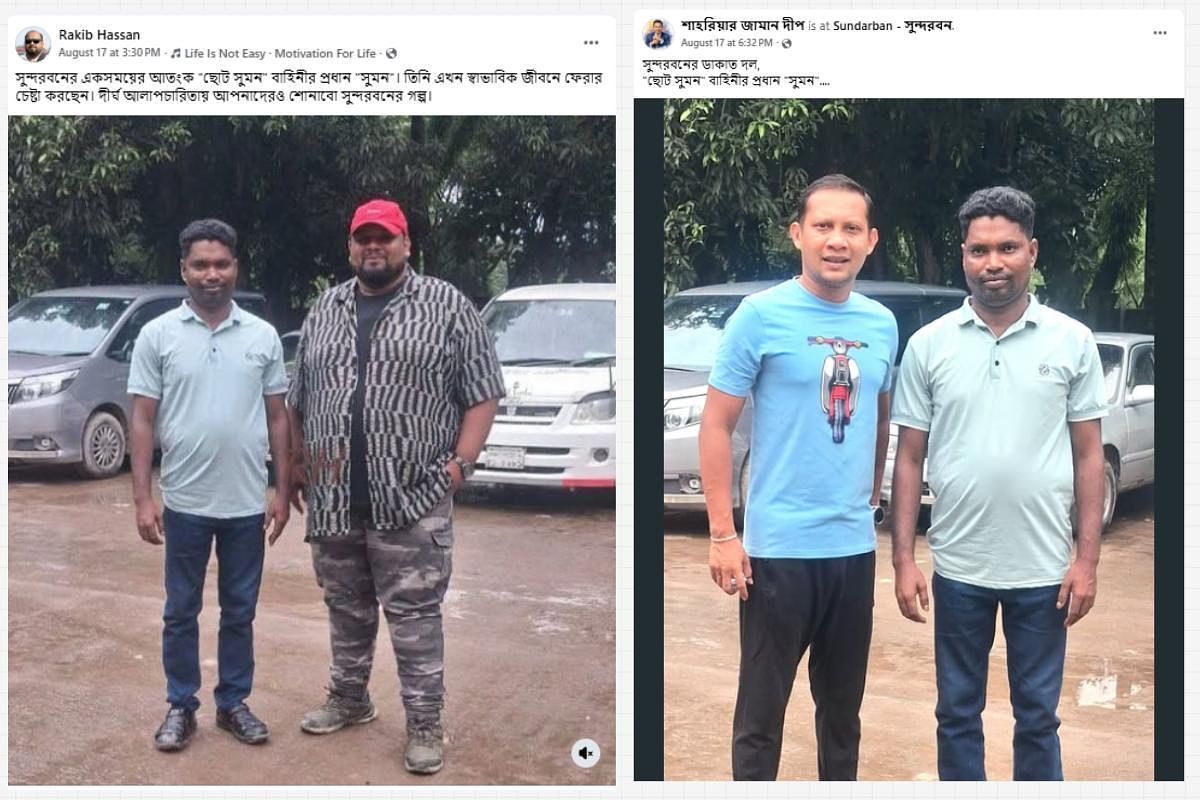
Further evidence that the Ekhon TV and Nagorik Protidin journalists traveled together emerged from Facebook posts made on August 17.
Nagorik Protidin's Rakib Hasan and Ekhon TV's Shahriar Zaman Dip posted photographs taken at the same location at the same time alongside Suman, the leader of the Sundarbans-based pirate group known as the "Chhoto Suman" gang.
Interviews with Chhoto Suman were broadcast in both media reports.
When Coast Guard public relations officer Russell was asked about the arrangements, he responded with questions of his own.
"Who gave you this information? Where did you get my phone number?" he asked.
Asked whether he had traveled from Agargaon in Dhaka to Bagerhat with the journalists on August 13, Russell initially remained silent.
When the question was repeated, he said: "I was at headquarters."
Asked whether he had gone to Bagerhat with the journalists, he replied: "I will not tell you anything on my personal number. Come officially, then I will... do it for you."
He then ended the call.
Nagorik Protidin staff reporter for crime Rakib Hasan denied using Coast Guard transport.
"We went in our own vehicle. We did not use any kind of Coast Guard vehicle, and this report was not sponsored by the Coast Guard," he said.
Extensive similarities between the two reports
Evidence that the Ekhon TV and Nagorik Protidin investigations were conducted together can also be found in the reports themselves.
During several interviews, microphones carrying the logos of both Nagorik Protidin and Ekhon TV can be seen simultaneously.
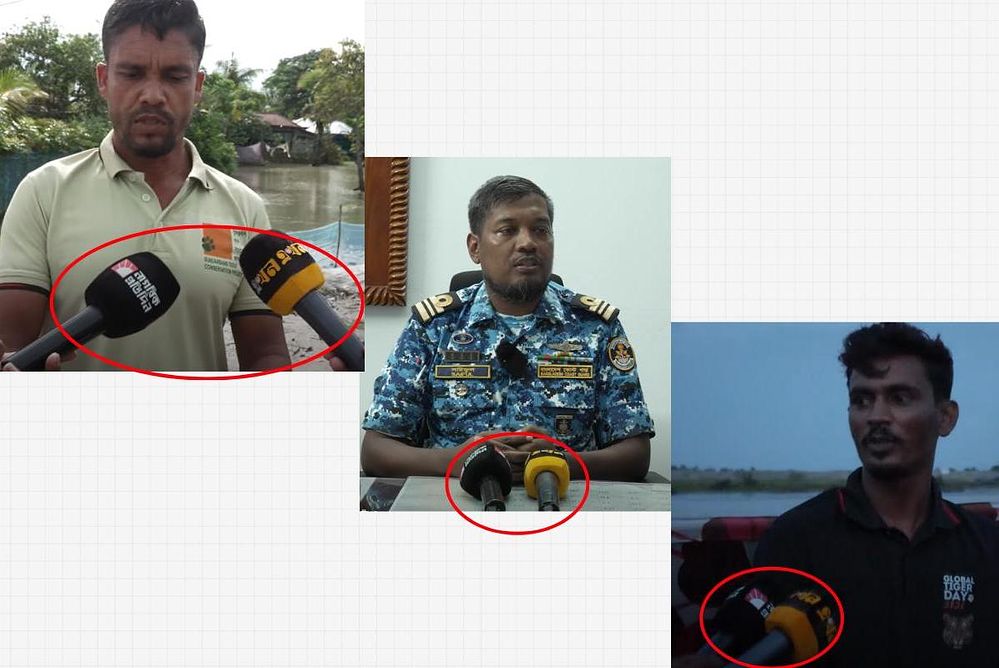
There are also striking similarities in the interviews used in both reports.
In several instances, the same remarks by the same interviewees, filmed from the same angle, appear in both reports. Several pieces of non-interview footage are also identical.
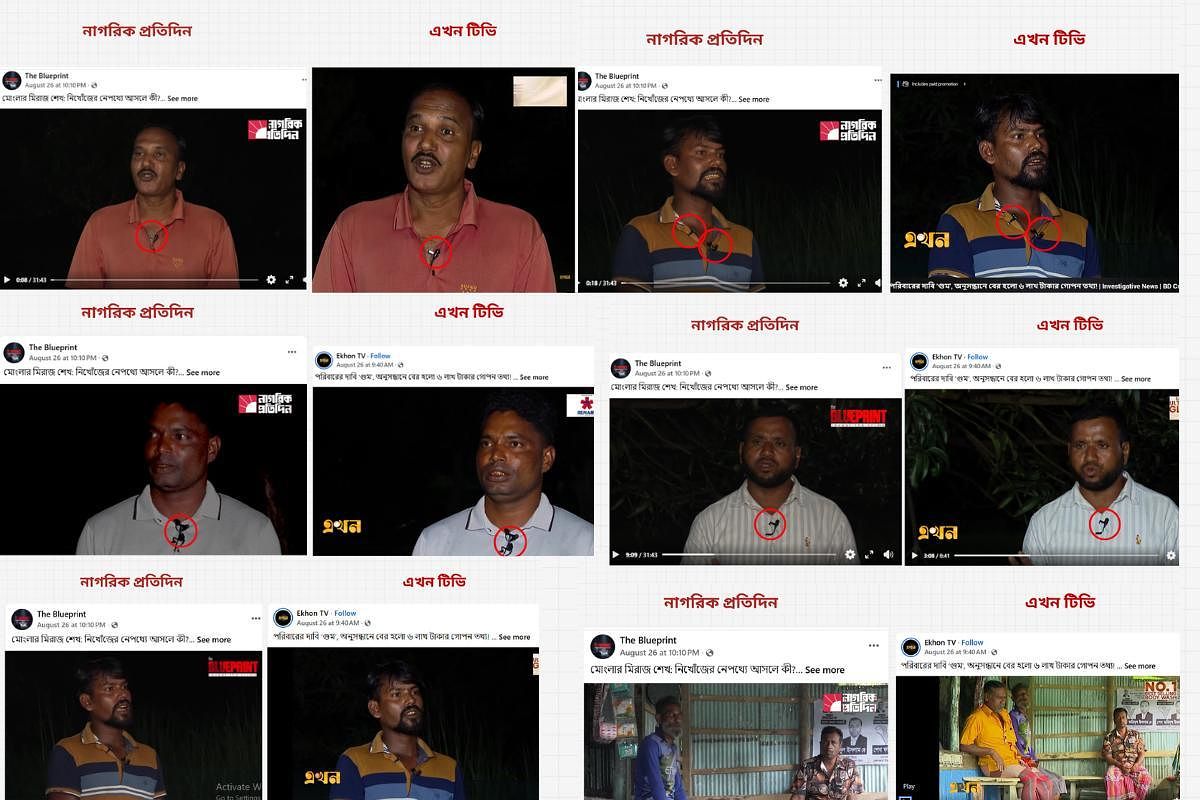
For example, both reports use the same statement by boatman Mannan Sheikh, whose boat witnesses had previously said was used to take Miraj to a Coast Guard pontoon.
The accounts concerning Miraj's alleged communication with Chhoto Suman, collection of money and transportation of weapons are also identical.
The description of money allegedly being delivered to Miraj on Chhoto Suman's instructions is the same in both reports.
The two reports also use the same video clip of local Union Parishad member Nazmul Hawlader discussing the alleged criminal history of Miraj's family.
Statements from two local neighbors were likewise broadcast identically by both outlets.
Several witnesses reverse earlier accounts
Among those who had previously said they saw two men identifying themselves as Coast Guard personnel force Miraj Sheikh into a boat and take him toward a Coast Guard station were tea stall owner Alamin Sheikh, boatman Mannan Sheikh and local homemaker Selina Begum.
For an investigative report published by The Dissent on July 30, this reporter spoke with Alamin Sheikh and Selina Begum.
At that time, both gave detailed accounts of seeing two men identifying themselves as Coast Guard personnel seize Miraj in front of them, put him on a boat and head toward a Coast Guard station on the river.
But in the Ekhon TV and Nagorik Protidin reports, they gave the opposite account.
In interviews broadcast by the two outlets, Alamin Sheikh said: "They came to me eight or 10 days later. They came to the shop and recorded my video... They told me beforehand that I should say things in a certain way. They said if I spoke like that, we might get our boy back. I thought about it myself and gave that statement at the time, saying the Coast Guard had taken him. That is completely fabricated. I can swear before Allah, with witnesses, that I did not see the Coast Guard take Miraj."
Alamin was also heard saying: "This is totally fabricated. They made it all up themselves. If they say the motorcycle was with me or had been left with me, couldn't they have taken a photograph of it?... This is fabricated. It is a lie."
Selina Begum also changed her previous statement. She told Ekhon TV:
"They pressured me, saying, 'You called him here and had the Coast Guard arrest my brother.' They said, 'We will bring journalists, and you must say these things. Otherwise, we will file a case against you. We have phone records. If you don't say it, we will implicate you in a murder case.'"
Another witness, Mannan Sheikh, also changed his account.
Witnesses had previously told the media that Miraj was taken aboard Mannan Sheikh's boat to the Bangladesh Coast Guard's Harbaria station on the Shela River.
But in both the Ekhon TV and Nagorik Protidin reports, Mannan is heard saying: "Seven or eight days later, Miraj's wife, Miraj's mother and his sister came to me and said, 'Brother, did our Miraj get onto the pontoon from your boat?' I said no. I hadn't seen Miraj, and the Coast Guard does not use boats belonging to civilians like us... Then [Miraj's family] said, 'Brother, the Coast Guard has taken my son,' and they were crying. Then they told me that it would be enough if I said I had taken him by boat and put him on the pontoon... They turned this into an issue and made a video. Then they released the video on mobile phones."
However, Miraj's sister, Liza Islam, said Mannan had previously admitted to her several times that the Coast Guard had taken Miraj aboard his boat.
Liza also secretly recorded one such conversation.
She sent this reporter a video of a conversation with Mannan Sheikh.
In the recording, Mannan can be heard speaking in front of several local men and women:
"What happened was, my nephew Rabiul was there, right? He and his wife, the two of them, got on. Hasan was also there. It had become dark. They [the Coast Guard] called out, and I stopped the boat. Then they put Miraj on the boat. I didn't know [beforehand]. Later, when I reached Thota, I heard Miraj had been there. Then everything became clear. They took him onto their [Coast Guard] pontoon. Nobody except the Coast Guard goes there."
Watch the video here.
Liza also has a recording of tea stall owner Alamin Sheikh's earlier account.
In a phone recording of a conversation between Liza and Alamin Sheikh, Liza is heard asking:
"Is Miraj's vehicle with you? Can the vehicle be returned?"
Alamin replies: "There is no way I can touch that vehicle."
Liza then asks: "Who left the vehicle there?"
Alamin replies: "The Coast Guard. They told me, 'You can leave, but make sure nothing happens to the vehicle.'"
Listen to the phone recording here.
Both the Ekhon TV and Nagorik Protidin reports also broadcast comments by local Union Parishad member Nazmul Hawlader.
In the Nagorik Protidin report, Hawlader is heard saying: "Miraj's wife and Miraj's mother came to me the following night. They told me, 'The Coast Guard has taken my son.' I said, 'Why would they take him? Was he involved in any operation?' They said, 'We can't say.' I said, 'If someone isn't involved in an operation, nobody will just take them.'"
But in an earlier phone-call recording obtained by The Dissent, Hawlader is heard saying:
"If there is any problem, tell me. The Coast Guard took him. That is 100% certain. He is with them. No matter how much they deny it. Be certain: he [Miraj Sheikh] is with them [the Coast Guard]."
Miraj's sister alleges witnesses were intimidated into changing statements
Miraj's sister Liza Islam told The Dissent that Coast Guard personnel were visiting people's homes and intimidating them so they would not speak in Miraj's favor.
"Those who had already spoken were also frightened into changing their statements," she alleged.
Liza said:"Shopkeeper Al-Amin is now saying he repeated words we taught him. Selina is saying she made her earlier statements because we threatened her. But tell me this: would someone falsely accuse a security force simply because we taught them what to say? Is that even plausible? Who is more powerful here — the Coast Guard or us? Is it really so difficult to understand whom these witnesses are afraid of when they change their statements?"
She added: "Many media outlets and I myself have recordings of these people's earlier statements. But now they are changing their accounts out of fear."
Last month, three local residents and a journalist also told The Dissent that the Coast Guard had pressured and threatened them not to speak about Miraj.
Local resident Sheikh Taizul Islam, the Mongla correspondent of the daily Ajker Bangla, told The Dissent that he and others had faced various forms of pressure after writing about Miraj's disappearance.
"We were threatened," he said.
Three local residents separately told The Dissent that they had received threats warning them not to speak about Miraj's disappearance.
Liza Islam said: "My sister-in-law worked at a garment factory in the EPZ. People would follow her on her way home from work. She was warned not to make a big issue of this. Eventually, she quit her job. People have repeatedly come to our house late at night to threaten us. We are so frightened that we have left our home and are living in hiding. I have switched off my SIM. If you call my number, you won't reach me. I have turned off the SIM and only use WhatsApp."
Miraj's wife, Mukta, alleged: "The witnesses who saw Miraj being taken away cannot sleep in their homes at night. They are having to spend the night in forests and graveyards."
Neither report included any member of Miraj's family
Despite traveling from Dhaka to Bagerhat under arrangements allegedly made by the Coast Guard, spending four days there and traveling aboard vessels belonging to the same force, neither Ekhon TV nor Nagorik Protidin included an interview with a member of Miraj Sheikh's family in reports that sought to establish that the Coast Guard did not take him away.
Instead, Liza Islam accused the reports of presenting false information about members of Miraj's family.
Ekhon TV's report claimed:"Although Miraj's sister claimed she was present at the scene at the time of the incident, technology shows that she was in Jashore at the time."
Liza Islam told The Dissent: "Not once in these four months and 17 days have I said anywhere that I was at the scene. Even when The Dissent reported on this, I said I wasn't at the scene. How could they make this claim in my name without even talking to me? Did I ever tell them I was there?"
The Dissent published an investigative report about Miraj's disappearance on July 30. At the time, Liza Islam explicitly said she had not been present when Miraj was taken away.
Ekhon TV's report also claimed: "Miraj's family says he was taken before evening. But information technology shows that a phone call came to Miraj's phone at 7:11 p.m. on the day he disappeared. Following that lead brings up a once-notorious name from the Sundarbans — pirate Chhoto Suman."
However, last month Miraj's mother, sister, wife and witnesses told The Dissent that Miraj went to Alamin's tea stall at around 7 p.m. and was taken shortly afterward.
In other words, the family did not allege that Miraj was taken before evening, but after nightfall.
Liza Islam told The Dissent: "We have never said that my brother was taken before evening. We have repeatedly said it was around 7 p.m., but after sunset, after Maghrib. And even if a call was made to Suman's number at 7:11 p.m., who can guarantee that it wasn't the Coast Guard making the call from Miraj's phone? They have also failed to provide any proof or evidence of financial transactions with Suman."
Unease inside Ekhon TV newsroom over report questioning disappearance
The decision to send a team under arrangements allegedly made by the Coast Guard and publish an investigative report promoting the narrative that "the Coast Guard did not take Miraj" has caused unease inside Ekhon TV's newsroom.
For this investigation, The Dissent spoke with at least 11 people in different positions to verify information and seek comment from those responsible for the Ekhon TV newsroom.
Ekhon TV's head of editorial, Tushar Abdullah, said by telephone that he was outside Dhaka and would speak later.
He could not subsequently be reached by phone.
The Dissent also sent him a WhatsApp message asking whether the purported investigative report had been sponsored by the Bangladesh Coast Guard.
He read the message but did not respond.
Special Correspondent Shahriar Zaman Dip denied using any Coast Guard transport.
"We did not use a Coast Guard vehicle, and we did not use any Coast Guard vessel," he told The Dissent.
"We took a boat there, and local residents saw it. If we had gone on a Coast Guard vessel, the locals would have seen that as well. We went to the location by boat.
"And Ekhon TV never produces sponsored programming. It is not just the Coast Guard — even if someone else wanted to pay for something, Ekhon Television would not broadcast such content.
"When I investigate something, I present what emerges from my own investigation. I do not conduct an investigation on the basis of information supplied by someone else. That is the rule of investigation. Because the purpose of an investigation is to establish the truth."
The other nine media workers interviewed by The Dissent spoke on condition of anonymity.
All nine, who hold different positions at Ekhon TV, expressed discomfort and anger about what they described as a commissioned investigative report intended to question Miraj Sheikh's disappearance.
They said many other senior and junior staff members had voiced similar frustration in the newsroom.
One Ekhon TV journalist said: "After this report aired, almost everyone in the newsroom was annoyed. In particular, many people could not accept that a team had gone on a tour sponsored by a force and then produced a report questioning a disappearance involving that same force."
Asked who had assigned the reporter to the story, at least three senior journalists familiar with the matter said the assignment desk had not given anyone the assignment.
All three sources said the assignment may have been given directly by editorial head Tushar Abdullah.
One said: "Shahriar Zaman Dip works directly under Tushar Abdullah. Dip is not part of the news team. He was recently recruited to launch a crime show. Since he joined in August, his name has never appeared on the assignment desk's rota."
Two other journalists confirmed that Dip was not a member of the regular news team.
Another Ekhon TV journalist said: "It feels like Tushar bhai's touch is in the script. At a time when all media outlets are calling this a disappearance, Ekhon Television has gone into the field to manufacture a narrative against the disappearance allegation."
The journalist added: "Everyone in the report spoke against Miraj and his family, but nobody from the victim's family was interviewed."
Several Ekhon TV journalists said the company's official rule requires reporters going on assignment to use an office vehicle.
But the reporter and video journalist who traveled to Bagerhat for the Miraj Sheikh story did not take an Ekhon TV vehicle, they said.
'Journalistic ethics have been trampled'
Dr. Md. Khorshed Alam, an associate professor at the University of Dhaka's Department of Mass Communication and Journalism, was asked about the two outlets' purported investigations conducted with Coast Guard logistical support.
He said that if the information presented to him was accurate, the arrangement constituted a conflict of interest.
"If the information you have given me is correct, I would say this is a conflict of interest," Alam said.
"When journalists conduct an investigation with assistance from those against whom the allegation has been made, a degree of bias naturally comes into play.
"The journalist is receiving their support, using their vessel, having hotel bills paid by them and receiving additional benefits.
"So if we consider that the investigation concerns the very people accused — as Human Rights Watch has also said — then I would say this goes against the rules, structures and ethical standards of journalism. We could call it sycophantic journalism."
Human rights activist Rezaur Rahman Lenin also criticized the prospect of a report being produced under the sponsorship of the Coast Guard, which itself faces allegations in the case.
"This is a serious offence," he said. "First of all, when someone is taken away in front of people in Bangladesh, there are witnesses. Here, there are also statements from Coast Guard representatives that amount to acknowledgments.
"Then how did Tushar Abdullah and the others enter such a situation and end up trying to protect the Coast Guard?
"We are witnessing an extraordinary collapse of journalistic ethics. The question is whether they are using the color yellow to practice yellow journalism."
What happened to Miraj Sheikh?
Miraj Sheikh, 30, lived in Joymoni Thota village in Mongla, Bagerhat.
He earned a living by fishing and collecting honey in the Sundarbans as well as by riding a motorcycle for work.
At around 7 p.m. on April 10, Miraj went to Al Amin's tea stall near his home.
While he was talking to local resident Sohel Alam, a small boat arrived at the riverbank from the Coast Guard's Harbaria station, located in the middle of the river.
Witnesses said the boat carried boatman Mizan Sheikh and two men in civilian clothes.
According to witnesses, after confirming Miraj's identity, the two men grabbed him and took him toward the jetty.
When Miraj asked why he was being detained, he was beaten, witnesses said.
He was taken to a jetty around 150 to 200 meters away and put aboard boatman Mannan's boat, which carried him to the pontoon at Harbaria station.
Several uniformed Coast Guard personnel later took Miraj toward Mongla in a speedboat, according to witnesses.
The Dissent spoke with seven witnesses, including Miraj's wife, and obtained video interviews with three witnesses.
Witness Sohel Alam said the boat had come from the Coast Guard pontoon and that members of the public were not allowed to travel to or from the pontoon.
Homemaker Mosammat Selina said Miraj was concealed behind a black cloth after being taken to the pontoon. He was then handcuffed and put aboard a Coast Guard speedboat, she said.
Tea stall owner Al Amin said that around 4 a.m., 10 or 11 days after Miraj was taken away, several people identifying themselves as Coast Guard personnel collected Miraj's motorcycle.
One of them identified himself as Robin, Al Amin said.
The Coast Guard later denied taking the motorcycle.
Miraj's wife, Mukta Khatun, said she rushed to the location after receiving the news and saw her husband being taken away in a boat.
Miraj has not been seen since.
The Coast Guard has denied detaining him.
Lt. Commander Mahbub Hossain, media officer for the Coast Guard's western zone, said Miraj's name had emerged in a statement given by a member of Chhoto Suman's gang.
He said the Coast Guard searched for Miraj on April 22 but could not find him.
Hossain also described the circumstances as suspicious because the family filed a general diary, or GD, with police on April 23.
Miraj's family says police accepted the GD only after they visited the station four times.
They also allege that in the GD written by police, officers recorded that Miraj had disappeared from below his home rather than being taken from the tea stall. Police deny the allegation.
They say an investigation into Miraj's whereabouts is continuing, but that there has been no significant progress.
In June, Miraj's family and local villagers organized a protest demanding his return. The protest led to clashes with the Coast Guard.
Following vandalism of a pontoon and speedboat, 12 people — including Miraj's mother, wife and sister — were arrested. They spent 27 days in prison.
Read The Dissent's detailed report on Miraj Sheikh here.
(Correction: Citing a source, The Dissent previously reported that an unidentified individual was accompanying Coast Guard Public Relations Officer Russell on the 13th. The photograph provided by the source was also published in the report.
However, further verification revealed that the person in the photograph was Ashiqur Rahman, a journalist with Uttar Dakshin. He stated that he had not travelled to Bagerhat with the Coast Guard at the time and was not involved in the matter. Photos and videos confirming his whereabouts were reviewed, and his claim was found to be accurate.
The Dissent has therefore removed the photograph.
When publishing the photograph based on the source’s claim, The Dissent clearly stated that it could not be independently verified at the time. Now that verification has become possible and the individual’s identity has been confirmed, the photograph has been removed.)